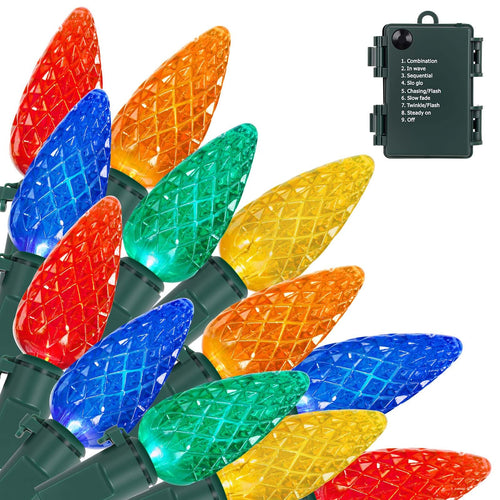

Battery, USB or solar? Choosing Christmas lights when there is no socket nearby

Quick answer: Choose battery lights for places with no power at all, such as wreaths, jars, mantelpieces and window frames. Choose USB lights where a USB port, power bank or USB plug adapter is close by. Choose solar lights for the garden, balcony or porch, where the panel can sit in daylight, and expect shorter evenings of light in midwinter.
Last updated: 23 November 2026
The socket is rarely where you want the lights. The wreath hangs on a door, the garland runs along a mantelpiece with nothing to plug into beneath it, and the prettiest window is on the wrong side of the room. Cordless lights get round that, but battery, USB and solar sets each have their own strengths. This guide explains how to choose between them, what to look for on a product page and how to look after the batteries.
The three power types at a glance
| Power type | Suits | Check on the product page | Bear in mind |
|---|---|---|---|
| Battery | Wreaths, jars, lanterns, mantelpieces, table centres, window frames | Battery size and number, whether batteries are included, timer and modes | Batteries run down; a timer stretches them |
| USB | Shelves, desks, bedrooms, anywhere near a laptop, power bank or USB adapter | Length of unlit lead, type of USB connector | The lead has to reach the power source |
| Solar | Gardens, balconies, porches, fences, planters | Panel and cable length, whether the set is made for outdoor use | Short winter days mean shorter evenings of light |
A general guide. Some sets can run from either batteries or USB; the product page says which.
The lights we sell run on batteries, USB or solar power, and the power type of every set is stated on its product page.
Battery lights: they go anywhere
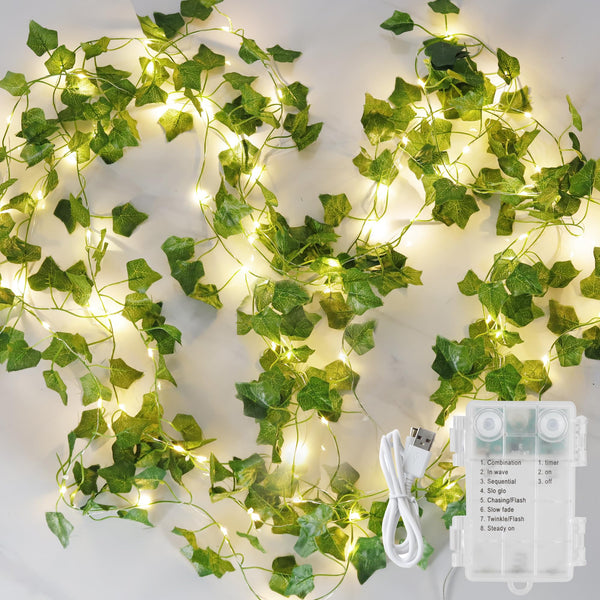
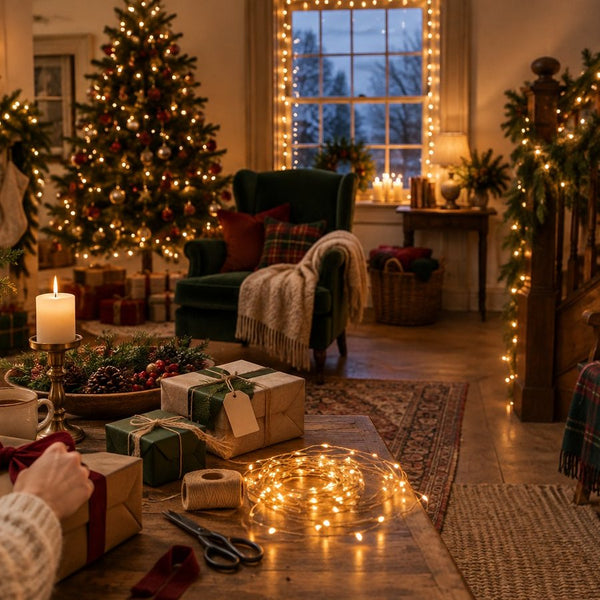
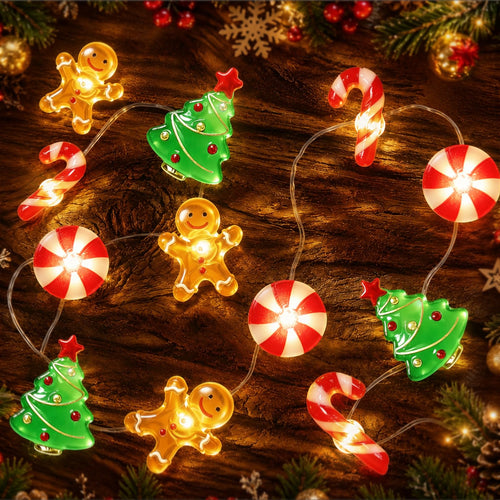
Battery sets need nothing but their battery box, which makes them the most flexible of the three. They are the natural choice for a wreath on an inside door, a glass jar or lantern, a garland draped over a picture frame or the middle of the dining table. Our battery, USB and solar fairy lights include fine copper-wire strings that wind neatly through greenery, as well as cluster sets and shaped bulbs.
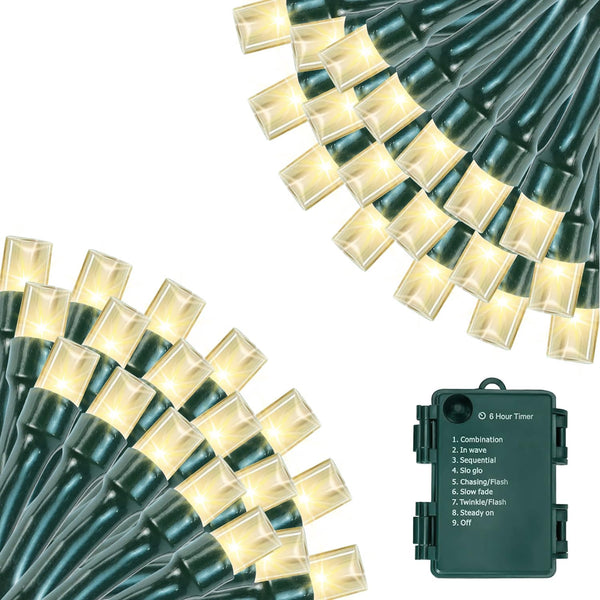
Before you order, look for three details: which batteries the set takes, how many, and whether they come in the box. Then decide where the battery box will hide. Behind a wreath, under a table runner or inside a jar are the usual places, but you still need to reach it to switch the lights on and change the batteries.
Many sets have a built-in timer or several lighting modes. A timer that brings the lights on for a few hours each evening is the simplest way to make batteries go further, and nobody has to remember the switch.
USB lights: steady power from a port
USB sets take their power from a USB port instead of a battery box, so there is nothing to replace. A laptop, a power bank or a USB plug adapter will run them. They suit bedrooms, home offices, bookshelves and the corner round the television, where something with a USB port is usually within reach.
The lead is the detail to check. The product page gives the length of unlit cable between the connector and the first bulb; measure from your power source to the point where the lights should start. A charged power bank makes a USB set portable for an evening, which is handy for a table centre or a shelf on the far side of the room. If you use a plug adapter, follow the instructions supplied with the lights.
Solar lights: for outside, with realistic expectations
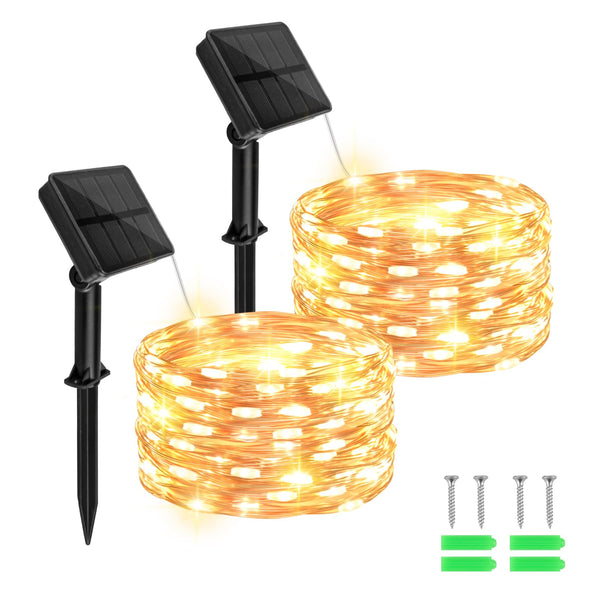
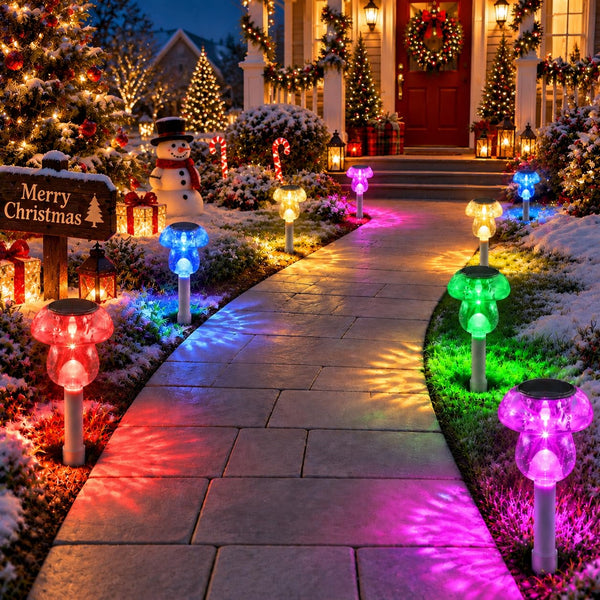
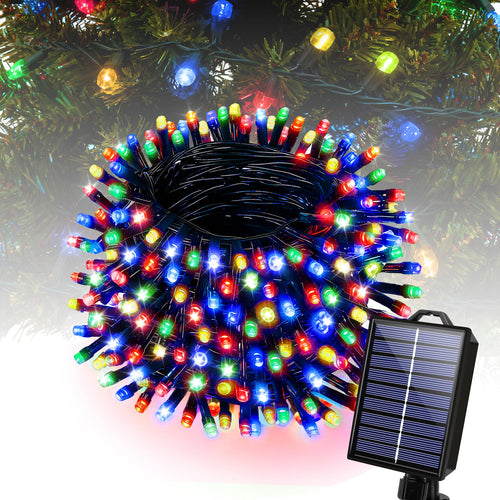
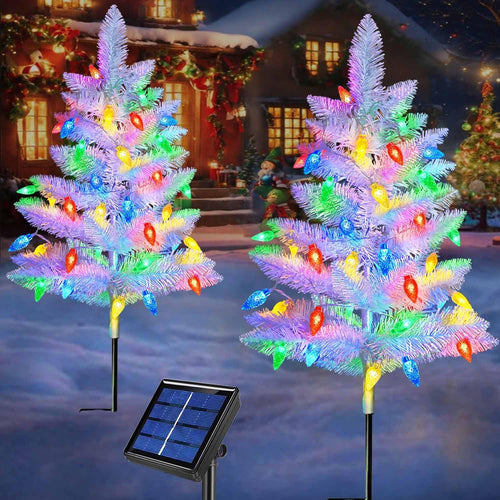
A solar set has a small panel that charges a built-in battery during the day, and most switch themselves on at dusk. There is no cable back to the house, which makes them the simplest way to light a hedge, a fence, a balcony rail or a pot by the front door. Our solar fairy and string lights and solar Christmas garden lights are made for this.
Be realistic about December. Which? says good solar lights still give light in winter, although how long the battery lasts will vary, and some lights will only last for about an hour after a full day of charging in the sun. Its advice is to find a spot for the charger that is in direct sun for at least part of the day. In practice the panel goes where the sky is open, not under the eaves or behind a hedge, even if the lights themselves sit in shade.
Check that a set is made for outdoor use before it goes outside. Our guide to Christmas lights safety in the UK explains the water-protection ratings you will see on outdoor products.
Which type for which spot
- Front-door wreath. Battery lights with the box tucked behind the frame, provided the set is suitable for outdoor use.
- Mantelpiece garland. Copper-wire battery lights wound through the greenery; warm white fairy lights sit well with natural foliage.
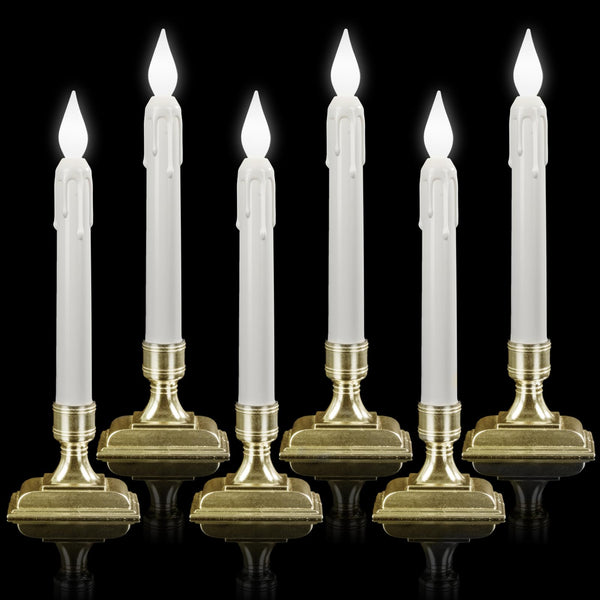
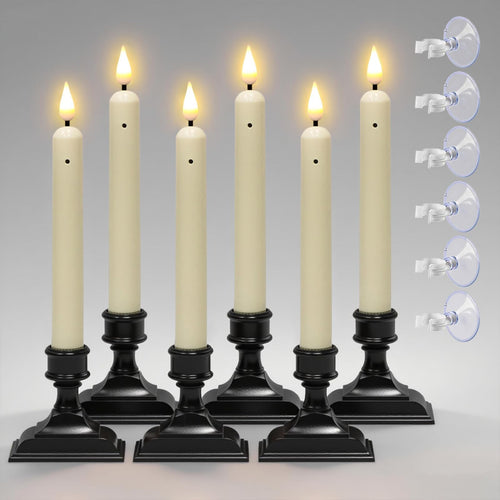
- Windowsill. LED window candles put a soft glow in each pane, and many have a timer or a dusk sensor.
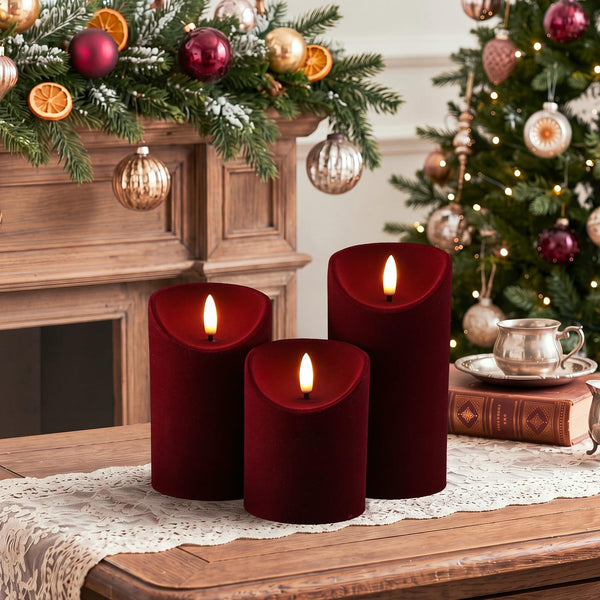
- Table centre. Fairy lights in a glass bowl, or flameless LED candles among the greenery.
- Bedroom or desk. USB lights powered from a laptop or adapter, with no batteries to replace.
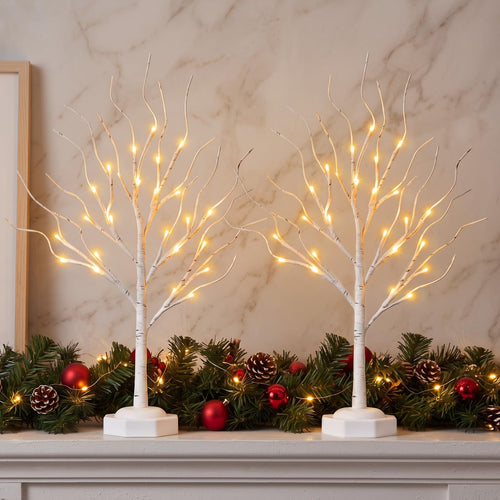
- A corner with no room for a tree. Lighted twig trees and branches add height and light in very little floor space.
- Garden, fence or path. Solar strings or stake lights, with the panel in the open.
For the tree itself, the number of bulbs matters more than the power type; our guide to how many lights a Christmas tree needs has a table by height.
Candlelight without a flame
Cordless lights are also a way to enjoy candlelight without the risk of a naked flame. In its candle advice, London Fire Brigade points to flameless LED versions as the far safer option compared with real candles and tea lights, and it asks that decorations are kept well clear of naked flames. Electrical Safety First explains that most LED Christmas lights work at extra-low voltage and run cooler, on far less electricity, than the old filament bulbs. Any light can still be knocked, crushed or chewed, so follow the instructions and warnings supplied with each set.
Looking after the batteries
- Check the type. The product page says which batteries a set uses. A few small decorations take button batteries, and those are a serious hazard if a child swallows one.
- Keep spares out of reach. The Office for Product Safety and Standards asks households to lock spare button batteries away where children cannot get at them, and to put any gadget with an unscrewed battery cover up high. Its campaign stresses that a used, apparently flat button battery can still carry enough charge to cause serious harm to a young child.
- Act fast. Where there is any chance a child has put a button battery in their mouth and swallowed it, OPSS says to go to the nearest A&E straight away or call 999, even if the child seems well.
- Take batteries out before storage. Remove them before the lights go back in their box, and look at the contacts when the set comes out again.
- Recycle them. GOV.UK guidance says waste batteries should not go into household rubbish, that most can be taken to your local supermarket, and that some types (lithium-ion) can catch fire if dumped in a bin.
Lights that have stopped working are small electricals too. Recycle Your Electricals, the national campaign, says that anything with a plug, battery or cable can be reused or recycled, warns that batteries from fairy lights can cause fires in bin lorries, and offers an online locator for the nearest drop-off point. Our guide to storing Christmas decorations explains how to pack a set away so it works again next year.
Common questions
Can I use battery fairy lights outside?
Only if the product page says the set is suitable for outdoor use, because indoor sets are not made to cope with rain. For gardens and porches, look first at solar lights or at battery sets described as outdoor lights.
Do solar Christmas lights work in December?
Yes, but for shorter spells. Which? found that some solar lights last only about an hour after a full day of charging, while others shine through to the morning after a short, sunny winter day. Put the panel where it gets direct sun for part of the day.
How long do the batteries last in fairy lights?
It depends on the number of bulbs, the lighting mode and how many hours a day the set is on. The product page gives the battery type and any running time stated by the maker. Using the built-in timer, where there is one, is the easiest way to stretch a set of batteries.
Can I run USB lights from a plug?
A USB plug adapter is one way to power them, as is a laptop or power bank. Use an adapter in good condition and follow the instructions supplied with the lights; browse our Christmas lights for sets with a long enough lead.
Shop the guide
- Battery, USB & Solar Fairy Lights
- Solar Fairy & String Lights
- Solar Christmas Garden Lights
- Warm White Fairy Lights
- LED Window Candles & Holders
- LED & Flameless Christmas Candles
UK delivery is free on every order, and so are returns within 30 days. See Christmas delivery dates and Returns & refunds for the details.
This guide is general information. Always follow the instructions and warnings supplied with each set of lights and each battery.
Sources
- Which?: Solar garden lights, tested and reviewed
- Electrical Safety First: Christmas lights
- London Fire Brigade: Candles
- GOV.UK (OPSS): Button batteries campaign – how to stay safe
- GOV.UK: Consumer products – recycling batteries and electrical waste
- Recycle Your Electricals: How to wrap up Christmas in a sustainable way